Jeff Bezos Says AI May Create a Labour Shortage, Not Mass Job Losses
June 17, 2026 · Peter101CJ
The AI Jobs Debate Just Took an Interesting Turn
Most people hear “AI” and think about one scary question:
Will this thing take my job?
It is a fair question. AI is already writing emails, producing code, creating images, answering customer questions, summarising documents, and doing work that used to take humans hours.
So when a major tech figure says AI may not lead to mass job losses, people listen.
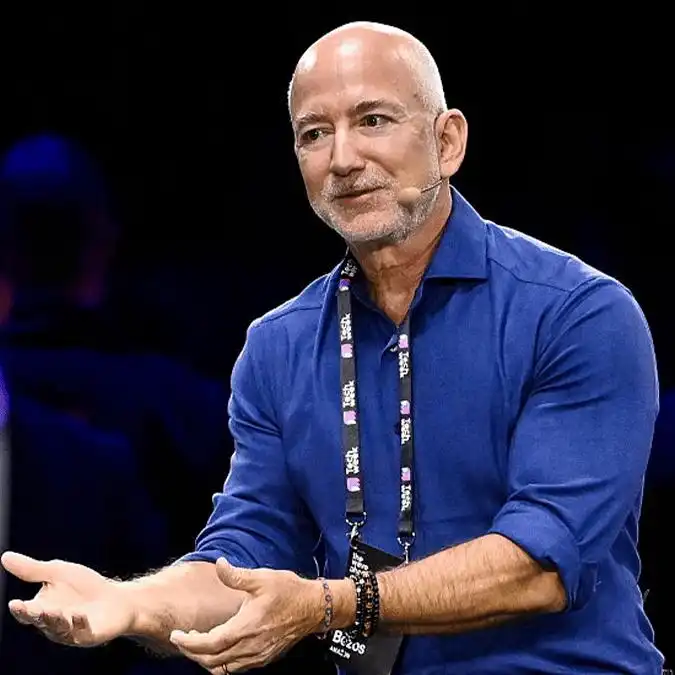
That is what Jeff Bezos said at VivaTech in Paris.
His view is simple, but it flips the usual fear on its head. Bezos believes AI will not leave humans with nothing to do. Instead, he says it could create so much new productivity, new demand, and new ambition that the economy may actually face labour shortages.
In plain English, his point is this:
AI may help us do more, so we may end up needing more people to build, manage, create, repair, design, and scale everything that becomes possible.
That is a very different story from “robots are coming for every job.”
What Did Jeff Bezos Say About AI and Jobs?
Bezos said artificial intelligence will lead to labour shortages, not the replacement of humans.
That does not mean AI will have zero impact on jobs. Nobody serious is saying that.
Some roles will change. Some tasks will disappear. Some companies will need fewer people for certain kinds of work.
But Bezos is looking at the bigger picture.
His argument is that when technology removes barriers, humans do not simply stop working. We usually find more things to do.
When computers arrived, they killed some tasks but created entire industries.
When the internet arrived, it disrupted old businesses but also created new careers, platforms, tools, and markets.
Bezos seems to believe AI will follow a similar path, but at a much larger scale.
Why This Matters
The AI jobs conversation has become very one-sided.
A lot of people are focused on what AI can replace.
Bezos is asking us to think about what AI can unlock.
That is an important difference.
If AI makes companies more productive, they may build more products. If engineers can design faster, they may attempt harder projects. If small teams can do work that once required huge teams, more people may start companies.
That could create new demand for workers, not less.
Think about it this way.
If AI helps a small business create better marketing, manage customers, build software, and analyse sales, that business might grow faster. If it grows faster, it may need more people in operations, support, sales, logistics, product, and management.
The work changes, but it does not automatically disappear.
The Fear Is Still Real
Now, let’s not pretend everyone will be fine overnight.
AI will still disrupt jobs.
Some people will need to learn new tools. Some industries will move faster than workers can adapt. Some companies will use AI mainly to cut costs. That part is real.
The danger is not that Bezos is completely wrong or completely right.
The danger is thinking there is only one outcome.
AI can replace tasks and create new work at the same time.
A company may need fewer people doing repetitive admin, but more people managing AI systems, checking quality, serving customers, building new products, or handling more complex problems.
That is the messy truth.
The Real Question Is Not “Will AI Take Jobs?”
The better question is:
What kind of work will still need humans?
And the answer is probably work that needs judgment, trust, taste, care, leadership, physical presence, creativity, and responsibility.
AI can help write a report, but someone still has to decide what matters.
AI can generate code, but someone still has to know whether the product solves a real problem.
AI can answer a customer, but someone still has to build a brand people trust.
AI can speed up work, but humans still carry the consequences.
That is why the future of work will not just belong to people who know AI. It will belong to people who know how to use AI with good judgment.
Why Bezos’ View Is Good News for Workers
Bezos’ comments give workers a more useful way to think about AI.
Do not just ask, “Can AI do my job?”
Ask, “How can AI help me do more valuable work?”
That mindset matters.
The workers who adapt early will have an advantage. Not because they become machines, but because they learn how to use machines well.
A writer who uses AI for research can spend more time shaping the story.
A developer who uses AI for debugging can focus more on architecture and product thinking.
A marketer who uses AI for drafts can spend more time on strategy.
A founder who uses AI for operations can move faster with a smaller team.
The point is not to compete with AI at tasks where AI is strong.
The point is to use AI to raise the level of your own work.
What Businesses Should Learn From This
For business owners, Bezos’ message is also important.
AI should not only be treated as a way to reduce headcount.
That is the lazy version of the strategy.
The better question is:
What can we now build that was too expensive, too slow, or too difficult before?
That is where the real upside is.
AI can help teams move faster, but speed only matters if the company has direction. A business still needs leadership, customer understanding, strong operations, and good people.
AI is a multiplier.
If the business is confused, AI may multiply the confusion.
If the business is focused, AI may multiply the results.
The Simple Takeaway
Jeff Bezos is not saying AI will have no impact on jobs.
He is saying the fear of mass replacement may be too small a way to look at what is coming.
AI could remove barriers, increase productivity, and create new demand for human work.
Some jobs will change. Some tasks will disappear. New roles will appear. The people who learn how to work with AI will likely be in a stronger position than those who ignore it.
So the real story is not “AI versus humans.”
The real story is “humans with AI versus humans without it.”
And that future is already starting.
FAQ
What did Jeff Bezos say about AI jobs?
Jeff Bezos said AI could lead to labour shortages rather than mass human replacement, because it may unlock more productivity and create more work to be done.
Will AI take people’s jobs?
AI will likely replace some tasks and change many roles, but it may also create new jobs and new industries. The impact will depend on the type of work and how companies use the technology.
Why does Bezos think AI could create labour shortages?
His view is that AI will remove barriers and help people do more, which could increase demand for workers in new areas.
What should workers do about AI?
Workers should learn how to use AI tools in their field, focus on judgment and problem-solving, and look for ways to move into higher-value work.
What does this mean for businesses?
Businesses should use AI not only to cut costs, but to build better products, serve customers faster, and attempt projects that were previously too difficult or expensive.